
Sweeper vs scrubber: which machine does your floor need?
A sweeper removes loose material — dust, grit, sand, leaf litter, packaging — into a hopper, dry, on any hard surface. A scrubber removes bonded material — tyre marks, oil film, spilled product — using water, detergent and brush pressure, on sealed floors only. Most commercial sites need both, sweeping first.
Written by the Contract Sweeping operations team · Reviewed by Mark Scull, 30 years in commercial cleaning · Updated 14 September 2026
The comparison, in nine rows
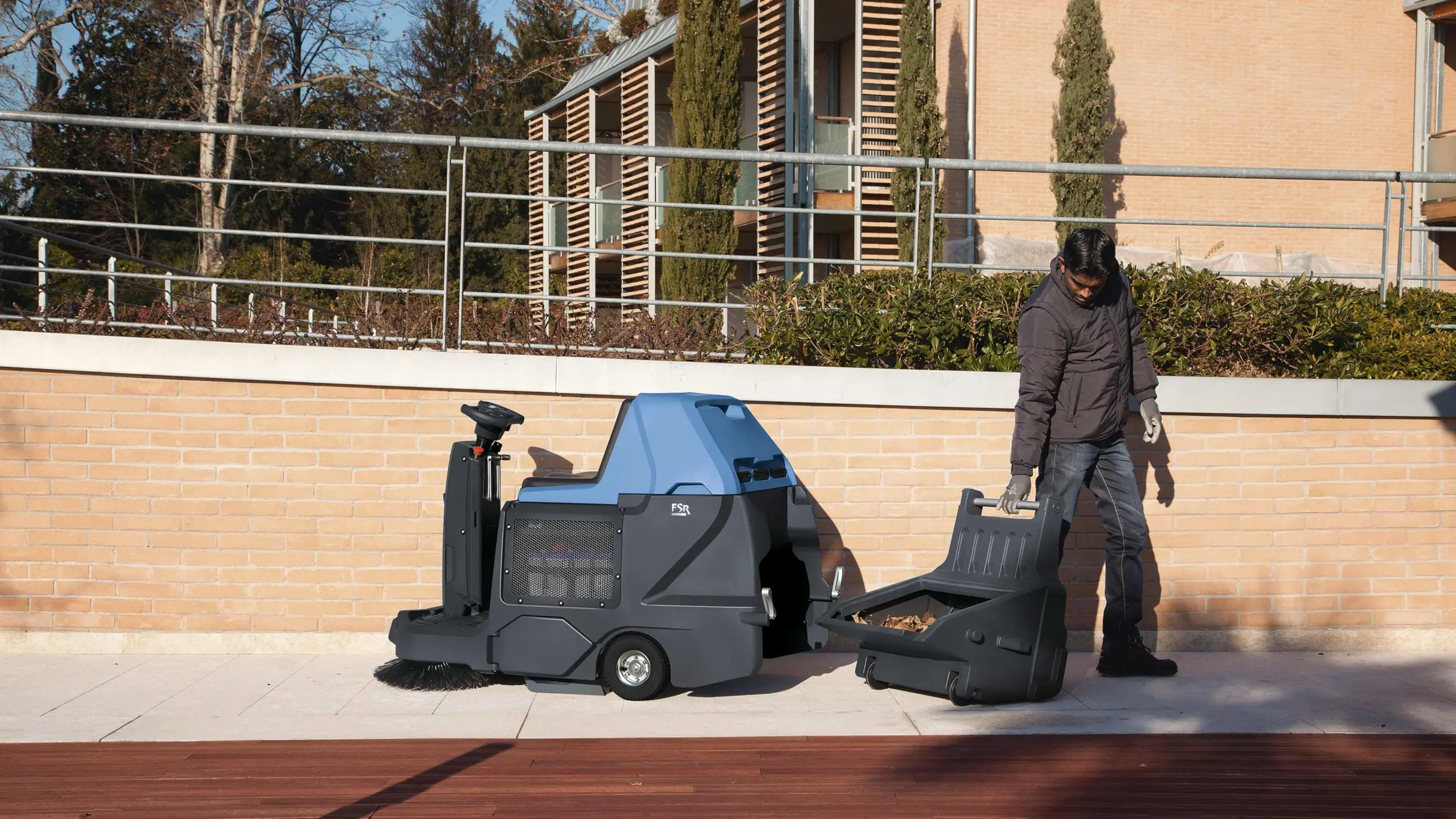

| Sweeper | Scrubber | |
|---|---|---|
| What it removes | Loose material sitting on the surface: dust, grit, sand, leaf litter, packaging | Material bonded to the surface: tyre marks, oil film, spilled product, traffic grime |
| How it works | Rotating main brush throws debris into a hopper; a vacuum draws the air through a filter | Solution down, counter-rotating brushes agitate, squeegee vacuums the dirty water back up |
| Water used | None | A controlled amount, nearly all of it recovered |
| Suitable surfaces | Concrete, bitumen, hardstand, pavers, sealed or unsealed | Sealed concrete, epoxy, tile, vinyl — sealed only |
| Floor afterwards | Dry, usable immediately | Dry behind the squeegee, no slip window |
| Indoors or out | Both, including roads and yards | Indoors, and undercover sealed areas |
| Typical cycle | Weekly to monthly | Fortnightly to quarterly |
| Order of work | First — always sweep before scrubbing | Second, once the grit is gone |
| Wrong tool when | Grime is stuck to the floor | Surface is unsealed, or debris is loose and coarse |
Thirty seconds, no equipment needed
Rub the mark with a dry boot. If it moves, a sweeper will take it; anything that stays needs scrubbing. That single test settles most sites, and it is the first thing we do on a site walk.
The second check is the surface. Pour a little water on it: if it beads or sits, the floor is sealed and can be scrubbed. If it soaks straight in, the floor is porous and should be swept only — wetting it just makes mud and leaves detergent in the slab.
The third is the debris. Coarse material — stone, sand, packaging — belongs in a hopper. Putting a scrubber through it grinds the grit into the floor and destroys pads.
Why most sites run a sweep and a scrub
Sweeping first is not a preference, it is mechanical. Grit left on a floor under a scrubber pad becomes an abrasive: it scratches the seal, wears the pad out in a fraction of its life, and drags soil across the surface instead of lifting it.
A common contract pattern is a weekly sweep with a monthly scrub. The sweep keeps the loose material under control; the scrub deals with what has bonded since last time. Combined visits cost less than two separate attendances and less than the consumables you burn doing it the wrong way round.
Machine size then follows the space rather than the building: ride-on where there is room, walk-behind between racking, hand-held for amenities and tight corners.
Questions we get asked
Can one machine do both?
Combination sweeper-scrubbers exist and suit some sites, mid-size sealed floors with light debris. On heavy or coarse debris a dedicated sweeper still does a better job, and that is what we would recommend.
Is a scrubber just a big mop?
No — the opposite. A mop spreads increasingly dirty water around; a scrubber applies clean solution, agitates mechanically, and vacuums the dirty water straight back into a recovery tank.
Which is better for a car park?
Sweeping. Car parks are unsealed or exposed bitumen with coarse debris, which is a sweeper’s job. Sealed undercover parking can be scrubbed where presentation matters.
What about an unsealed concrete warehouse floor?
Sweep it. There is no seal for detergent to work against, so scrubbing wets the slab without lifting much. If the floor matters to you, sealing it first changes what is possible.
Do I need both on every visit?
No. Many sites sweep more often than they scrub — the loose debris returns faster than bonded grime builds.
Not sure which your site needs?
We will run the boot test, check the surface and tell you plainly — sweeping, scrubbing, or both.