
Warehouse and distribution centre floor cleaning
Warehouse floors are swept to remove pallet debris, grit and dust, then scrubbed on the traffic lanes where tyre marks and product residue build up. We work around live racking and forklift movements with site-inducted operators, on a weekly sweep and monthly scrub cycle.
Written by the Contract Sweeping operations team · Updated 14 September 2026
What actually dirties a warehouse floor
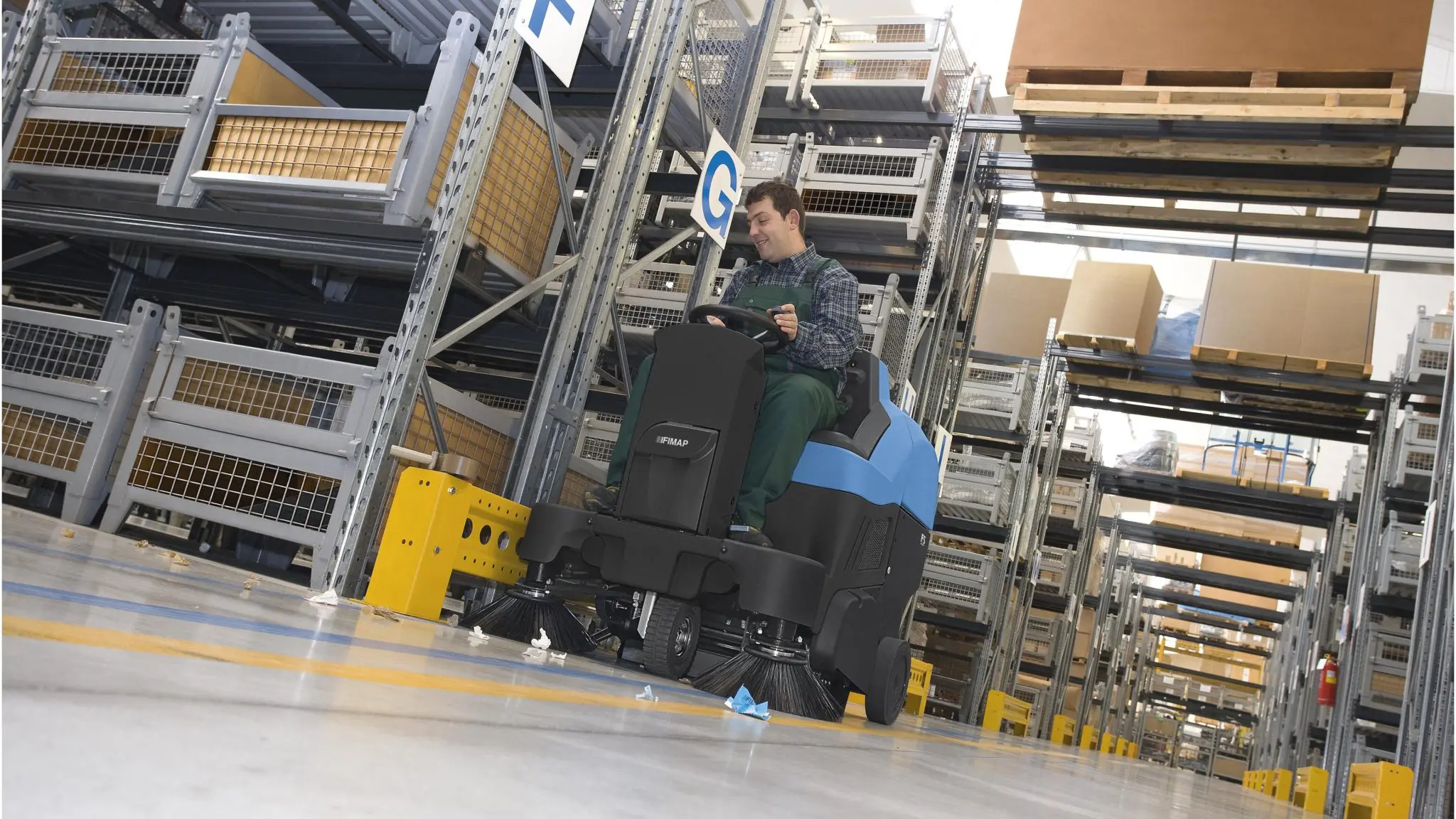
Three sources, in order of volume. Pallet and packaging debris — timber splinters, strapping, shrink wrap, cardboard dust — sheds continuously wherever stock is handled. Grit walks in on forklift tyres and boots from the yard and the dock. And product dust, in food, building-supply and manufacturing sites, settles on everything including the racking.
Left alone it compounds. Grit under a forklift tyre grinds a sealed floor and shortens the life of the seal. Dust on racking becomes a food-safety or audit problem. And a dirty floor makes line marking and hazard markings hard to read, which is a WHS issue before it is a presentation one.
How we run a live warehouse
We agree a pass order with the site supervisor before the first visit — working with the flow of forklift traffic rather than against it, taking aisles as they free up, and leaving dock areas until the last delivery is through. Nothing about the schedule requires you to stop work.
Machine choice follows aisle width, not building size. A ride-on covers open floor and dock aprons fast; a walk-behind gets closer to racking legs and pallet edges. Most sites use both on the same visit.
Where the floor is sealed, the traffic lanes are scrubbed rather than just swept. That is where the rubber and product residue sits, and it is what makes the difference between a floor that looks swept and one that looks clean.
What most warehouse sites settle on
A weekly sweep with a monthly scrub covers most distribution centres. Higher-throughput 3PL sites move to twice-weekly sweeping; low-turnover storage warehouses sit comfortably at fortnightly.
Night and weekend windows are common here and we work them routinely — it is the only time a dock area is genuinely clear.
Questions we get asked
Can you work while the warehouse is operating?
Yes, and most of our warehouse work is done that way. Operators are site inducted, work to your traffic-management plan, and give way to your equipment rather than the other way around.
Will sweeping raise dust onto our racking and stock?
Not with a filtered machine. A commercial sweeper draws the working air through a filter, which is the difference between removing dust and relocating it. Dry brooming is what puts it back onto stock.
Do you clean dock areas and aprons as well?
Yes. The external apron is the source of the grit walking inside, so cleaning the floor without it is a short-term fix.
Can you clean around racking without moving stock?
Yes. We sweep what is accessible on the day and note anything blocked. If a bay is consistently obstructed we will tell you rather than quietly skipping it.
Get your site quoted
Free site walk, with the written quote back inside one business day.